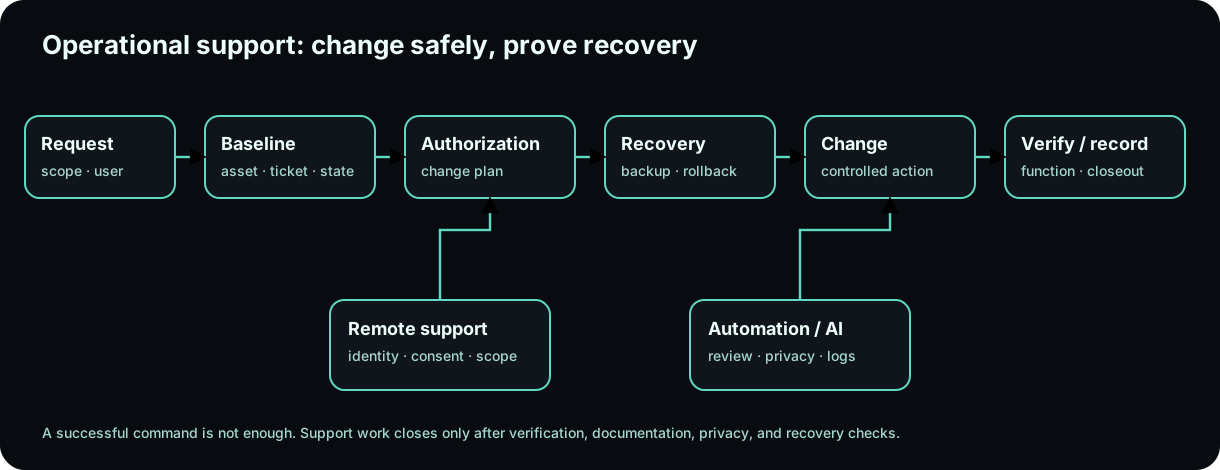
Visual evidence: A change record should preserve the evidence needed to understand, reverse, and verify the work.1. Use the operations workflow as evidence. Which information belongs in a defensible change record?A. Only the final resultB. Purpose, approval, baseline, change, rollback, and verificationC. Only the device nameD. No timestamps2. What makes a backup operationally trustworthy?A. The backup icon is greenB. The file exists somewhereC. The user remembers configuring itD. A restoration/recovery test proves the required data or system can be recovered3. Why minimize personal data in support notes?A. Only information needed for authorized support should be retainedB. It increases CPU performanceC. It changes licensingD. It avoids all documentation4. What should happen before remote support starts?A. Disable securityB. Ask for every credentialC. Verify authorization, identity, scope, and approved access methodD. Make changes silently5. How should AI-generated technician advice be treated?A. As automatically correctB. As assistive output that must be checked for privacy, correctness, authorization, and safe executionC. As permission to bypass change controlD. As a replacement for evidence6. Why separate the user's complaint from the observed symptom?A. Users are always wrongB. Complaints are not usefulC. It eliminates communicationD. The complaint is a description; observed behavior provides testable evidence7. What makes the next troubleshooting tool appropriate?A. It directly tests the current theory or boundaryB. It is the most expensiveC. It produces the longest outputD. It requires admin rights8. Why plan rollback before a correction?A. Rollback proves the change will failB. It avoids verificationC. It provides a safe return path if the change causes a worse stateD. It is only for servers9. Two symptoms appear at the same time. When should they be treated as one incident cause?A. AlwaysB. Only when evidence actually connects their failure pathsC. NeverD. Whenever the user says so10. What should a technician defend in a review board?A. Only the final fixB. Only the toolC. Only the ticket numberD. The evidence chain, alternatives, correction, rollback, and verification11. What belongs in a client intake baseline?A. Assets, needs, dependencies, authorization, safety/privacy constraints, and current stateB. Only the final hardware listC. Only passwordsD. Only the budget12. What makes a target-state configuration defensible?A. It uses maximum-cost hardwareB. It has the most settingsC. Each choice maps to a requirement and considers compatibility, security, and recoveryD. It ignores constraints13. A host responds to ping but its application port is closed. Which boundary failed?A. Basic IP reachabilityB. Service/application availabilityC. Physical link completelyD. Monitor output14. How do you verify final recovery readiness?A. Assume backup successB. Read the backup labelC. Verify encryption onlyD. Perform a bounded recovery/restoration check against the requirement15. What belongs in the final client briefing?A. Only technical jargonB. Only unresolved problemsC. Completed work, verification evidence, remaining risk, and follow-up/escalationD. A promise that nothing will ever failGrade locally (0/15)